PRP in Milan, hair and face
Your own platelets, up to 12 times more concentrated than standard PRP, returned to where they are needed: to the thinning follicle and to skin that is losing thickness. Prepared under an agreement with the Transfusion Service and injected by doctors at Via Sant'Andrea 21.
More platelets, every session
We prepare the plasma with a system that concentrates platelets up to 12 times more than standard PRP. More growth factors reach the tissue, and growth factors are what drive regeneration.
Transfusion Service agreement
In Italy, PRP outside hospitals can only be prepared under an agreement with a Transfusion Service. KinAura has one.
Always a doctor
From the blood sample to the injections, every step is overseen by a doctor, through to the final review.
What PRP is
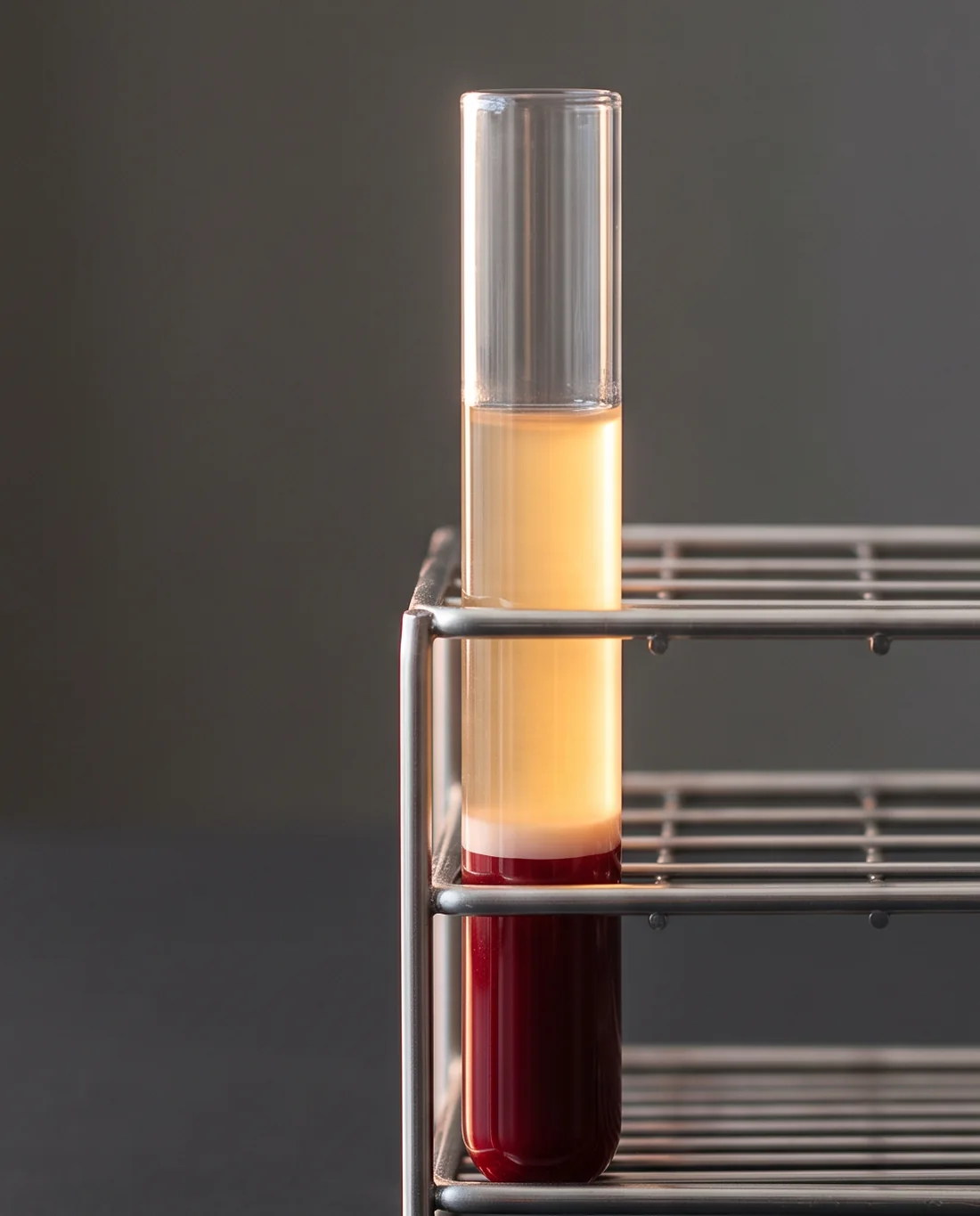
A small sample of your blood, spun to separate the plasma and concentrate the platelets. Platelets hold growth factors and vesicles that signal cells to repair. Everything comes from you: nothing foreign goes into the skin.
- Sessions 3–4sessions
- The classic course for hair.
- Interval 4weeks
- The time between one session and the next.
- Result 3–6months
- The slow pace of follicles and collagen.
- Price from €500
- Per session, hair or face.
- Maintenance 6months
- A top-up session to keep the result.
One plasma, two destinations
The same platelet concentrate works on the scalp and on the face. Choose an area to see what happens beneath the skin.
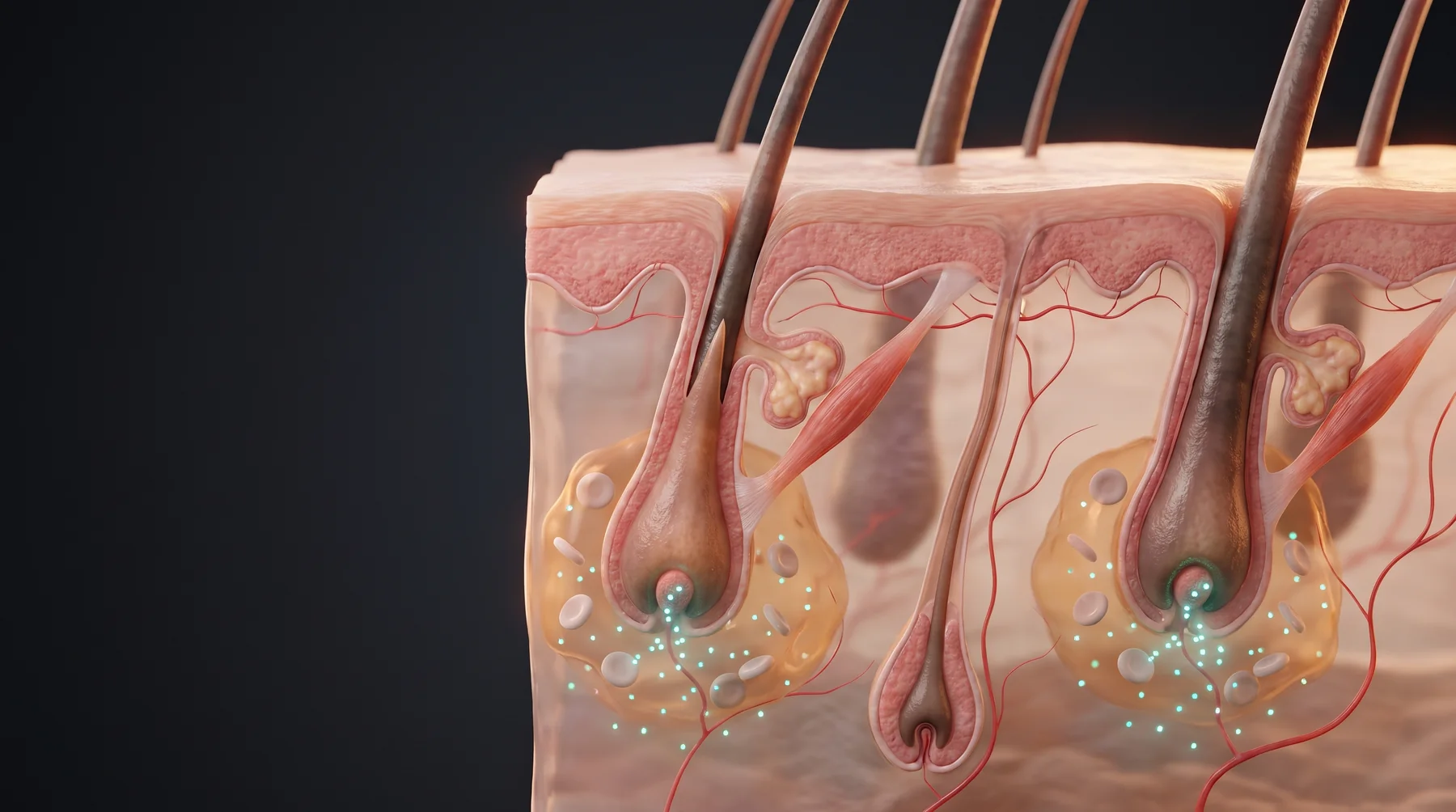
The follicle gets back to work
In androgenetic thinning the follicle shrinks and produces ever finer hairs as the growth phase shortens. Injected into the scalp, PRP brings growth factors to the bulb that support the papilla cells, encourage small new vessels and extend the growth phase of the hair.
Sources: Gentile et al., Stem Cells Transl Med 2015 (doi) · Anitua et al., Dermatol Ther 2025 (doi)
Regenerate without filling
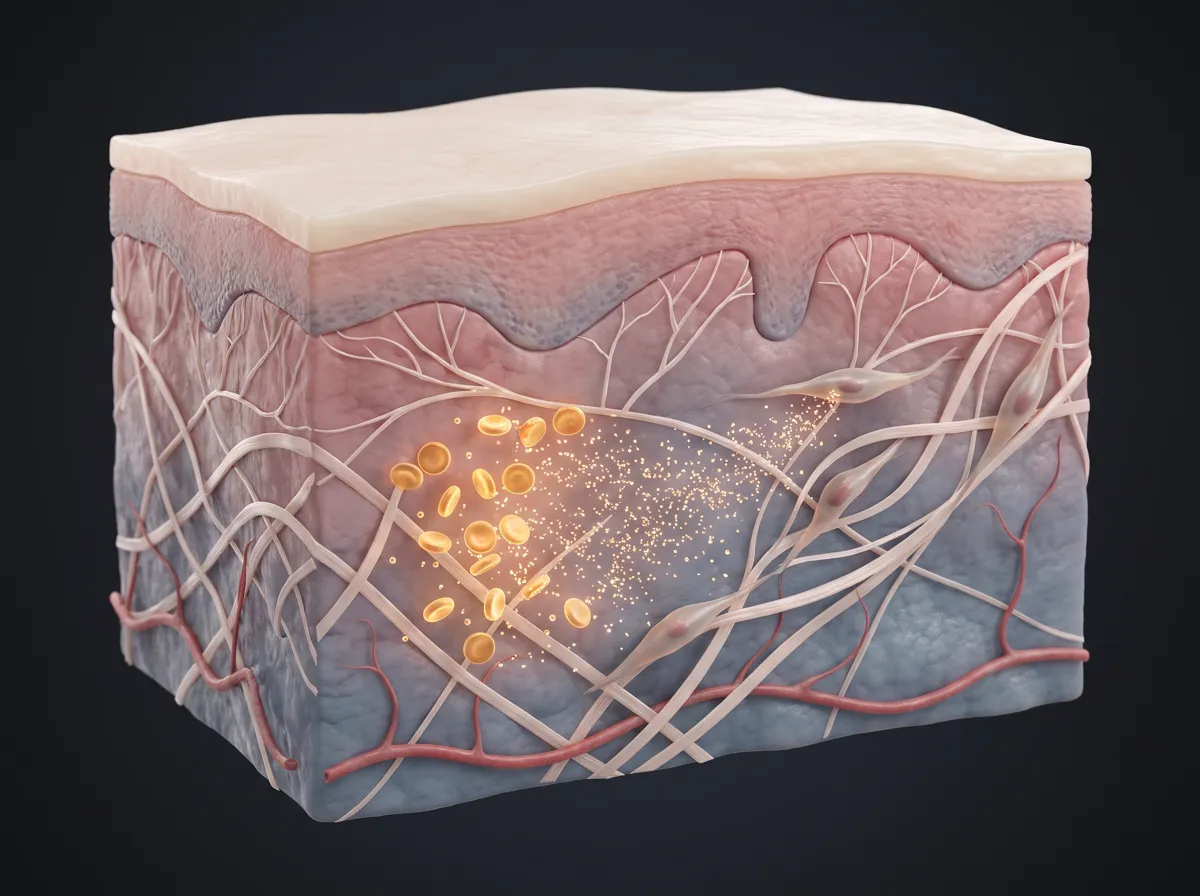
On the face PRP adds no volume. Placed in the dermis, it activates fibroblasts, the cells that make collagen and elastin, and supports the small vessels that feed the skin. The result is thicker, more elastic skin, with the face you have always had.
Around the eyes, PRP is among the most studied options for dark circles: in a review of 14 studies it gave its strongest results on pigmentation.
Sources: Qin et al., Ann Plast Surg 2025 (doi) · Sollitto et al., J Cosmet Dermatol 2025 (doi)
Not every PRP is the same
Platelet concentration and the way the plasma is prepared change what reaches the tissue. These are the questions to ask wherever you decide to be treated.
- Comparison
- Standard PRP
- KinAura PRP
- Concentration
- Variable, depending on the kit
- Up to 12 times standard PRP
- Preparation
- To be checked case by case
- Under an agreement with the Transfusion Service
- Who injects it
- To be checked case by case
- Always a doctor
- The plan
- Varies from clinic to clinic
- A course, reviews at 3 and 6 months, maintenance
What happens, month by month
- Today
The session
Blood sample, plasma preparation and micro-injections. Then you go straight back to your day.
- 4 wks
The next session
Growth factors have started working on follicles and fibroblasts. Time for the second appointment.
- 3 mo
The first signs
Fewer hairs on the brush, firmer skin. We hold the first review.
- 6 mo
The result is measured
The hair cycle and the collagen cycle are complete: we assess density and skin quality and plan maintenance.
Where PRP works
From the scalp to the neck, the plasma goes where skin or follicles need to restart.
From the cause to maintenance
- 01
The assessment
The doctor examines your scalp or skin and looks for the cause: deficiencies, thyroid, medicines and stress need different treatments. The consultation is free.
- 02
Sample and preparation
A small blood sample, then the plasma is separated and concentrated up to 12 times more than standard PRP.
- 03
The sessions
Micro-injections with a fine needle. For hair, three or four sessions, one every four weeks.
- 04
Review and maintenance
Reviews at three and six months, then a maintenance session usually every six months.
What to do, what to avoid
Before the session
- Drink water and have a light meal: it makes the blood sample easier.
- If you take antiplatelets, anticoagulants or anti-inflammatories, tell the doctor.
- For hair, come with a clean scalp, without hairspray or leave-in products.
After the session
- Scalp: no shampoo for the rest of the day and no hair colour for a few days.
- Face: mild redness and a few small bruises can last one or two days.
- For 24 hours no intense exercise, sauna or steam room.
Quality and firmness
PRP works on tissue quality. When volume or tone are also needed, we include it in a plan with biostimulators, biorevitalisation or XERF.
Every session at KinAura is performed by a doctor. Meet the medical team
What people ask us most
If your question is not answered here, message us: our reception team will reply, and the doctor too when needed.
What is PRP?
PRP stands for platelet-rich plasma. It is obtained from a small sample of your blood, spun to concentrate the platelets. Platelets carry growth factors involved in tissue repair; injected into the scalp or the face, they support the follicle and the skin.
Does PRP for hair work?
For androgenetic alopecia, meta-analyses of randomised trials show more density and less shedding than placebo. It works best when the follicle has thinned but is still alive, so in the early and middle stages of thinning.
How many PRP sessions do I need?
For hair usually three or four sessions, one every four weeks, then maintenance, which at KinAura is usually every six months. For the face the doctor sets the course according to your skin and goal.
How much does PRP cost in Milan?
At KinAura a PRP session starts from €500, for hair or face. For hair the course is three or four sessions, then maintenance every six months.
When will I see results?
For hair, the first changes are assessed after about three months and the result is measured properly at six. On the face the skin improves gradually in the weeks after the course, as new collagen forms.
What does PRP do for the face?
It works on skin quality without adding volume. In the most recent systematic review the strongest results concern skin thickness and elasticity. It is regenerative medicine: your face stays yours, only firmer and brighter.
How is KinAura PRP different from standard PRP?
We prepare PRP with a system that concentrates platelets up to 12 times more than standard PRP, so each session delivers more platelets and more growth factors to the tissue.
Who can prepare PRP in Italy?
In Italy PRP is a blood component for non-transfusion use. Outside hospitals it can only be prepared by facilities with an agreement with a Transfusion Service. KinAura has this agreement.
Does PRP hurt?
Small injections are made with a fine needle. It is well tolerated and can be eased with cooling or local anaesthetic. You go straight back to your day.
What should I do after the session?
For the scalp: no shampoo for the rest of the day and no hair colour for a few days. For the face: mild redness and a few small bruises can last one or two days. In both cases avoid intense exercise, sauna and steam room for 24 hours.
Who should not have PRP?
PRP is not suitable during pregnancy and breastfeeding, with some blood or platelet disorders, with an active infection in the area to treat, or on anticoagulants. The doctor checks this before the session.
Can it be combined with other treatments?
Yes. For hair it works well alongside the therapies the doctor prescribes for thinning. For the face we include it in plans with biorevitalisation, biostimulators and XERF when volume or firmness are also needed.
Do I need a consultation before PRP?
PRP can be booked directly. If you first want to understand the cause of thinning or the plan for your skin, the consultation is free.
You may also like
Featured in
Your plasma at Via Sant'Andrea
Book the treatment or the free consultation. We start from the cause and build the right course for you together.
- Gentile P, Garcovich S, Bielli A, et al. The Effect of Platelet-Rich Plasma in Hair Regrowth: A Randomized Placebo-Controlled Trial. Stem Cells Transl Med. 2015;4(11):1317-23. doi:10.5966/sctm.2015-0107
- Anitua E, Tierno R, Alkhraisat MH. Platelet-Rich Plasma in the Management of Alopecia: A Systematic Review and Meta-Analysis of Clinical Evidence. Dermatol Ther (Heidelb). 2025;15(11):3213-3252. doi:10.1007/s13555-025-01542-8
- Zhang X, Ji Y, Zhou M, et al. Platelet-Rich Plasma for Androgenetic Alopecia: A Systematic Review and Meta-Analysis of Randomized Controlled Trials. J Cutan Med Surg. 2023;27(5):504-508. doi:10.1177/12034754231191461
- Paichitrojjana A, Paichitrojjana A. Platelet Rich Plasma and Its Use in Hair Regrowth: A Review. Drug Des Devel Ther. 2022;16:635-645. doi:10.2147/DDDT.S356858
- Qin N, Kochheiser M, Akosman I, et al. Systematic Review of Platelet-Rich Plasma and Platelet-Rich Fibrin in Facial Rejuvenation. Ann Plast Surg. 2025;94(4S Suppl 2):S376-S389. doi:10.1097/SAP.0000000000004267
- Sollitto CF, Narduzzi M, Wolinsky C. A Systematic Review of Platelet-Rich Plasma Versus Platelet-Rich Fibrin for Periorbital Rejuvenation. J Cosmet Dermatol. 2025;24(11):e70524. doi:10.1111/jocd.70524