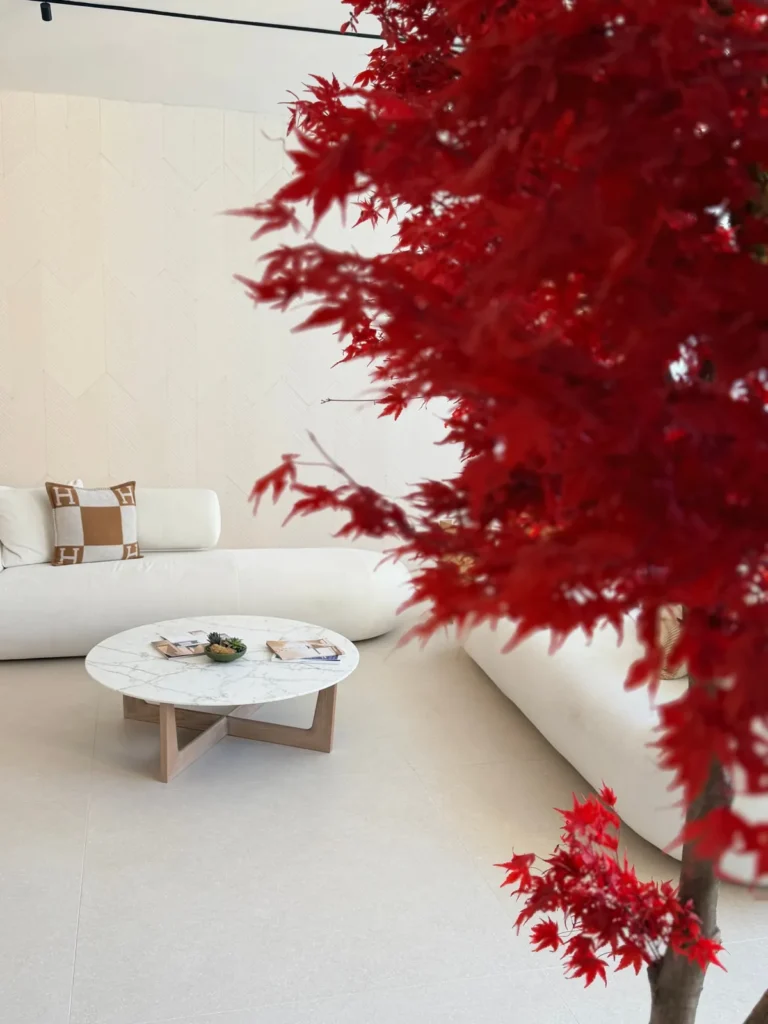
Red light therapy in Milan
Twenty minutes on a bed of red and near-infrared light. The light reaches the cells of the skin and tissues, which use it to produce energy.
Light that regenerates
You lie down, wear protective glasses and the light surrounds your whole body. A gentle warmth, twenty minutes, and you are back to your day.
Full body
A medical bed treats the whole body surface in one session.
Before or after
It pairs with aesthetic treatments and with recovery and longevity plans.
What red light therapy is
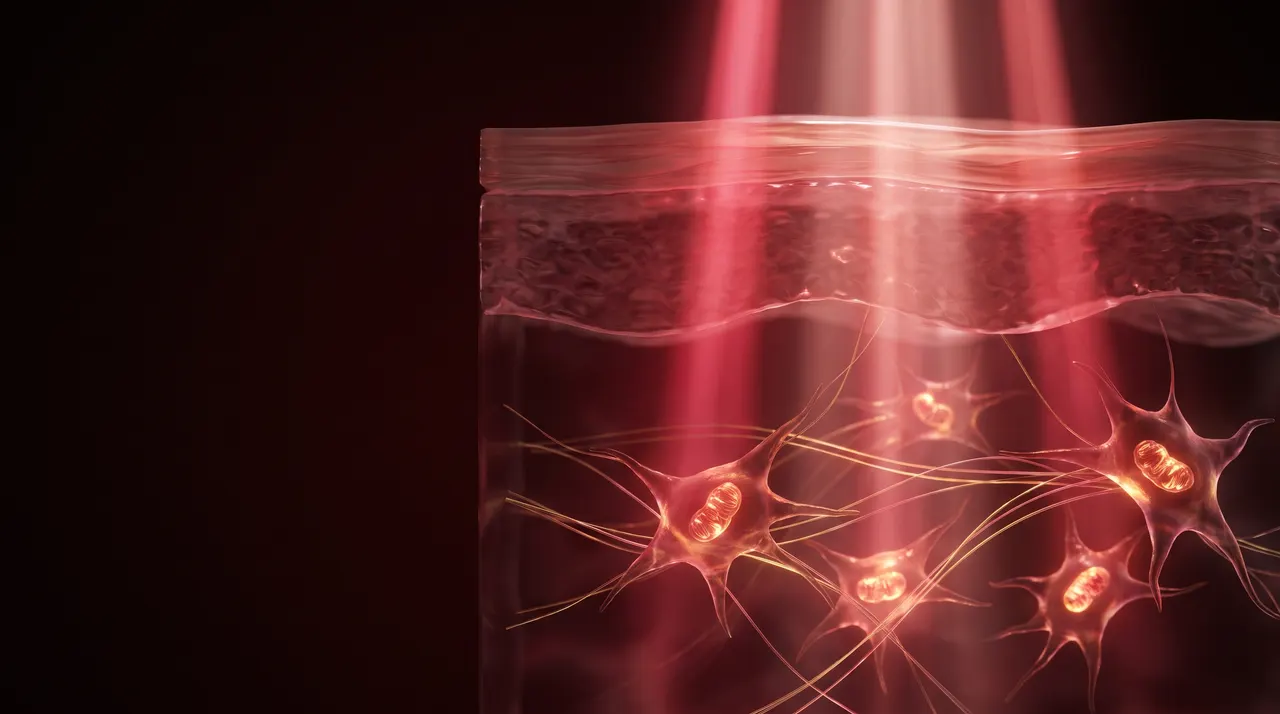
Photobiomodulation: red and near-infrared light with low heat. It does not tan or burn. It is absorbed by the mitochondria in cells and stimulates the skin's repair processes.
- Pace 2a week
- The pace used in studies.
- Duration 20min
- Full body.
- Light Red
- And near-infrared.
- Downtime None
- You go straight back to your day.
Collagen, measured
The most cited controlled study on large-area red light measured skin changes with ultrasound and profilometry.
136 volunteers
In a randomised controlled study, 113 volunteers were treated with red or red and near-infrared light twice a week for thirty sessions and compared with 23 untreated controls. The devices were designed for large areas and the full body.
Sources: Wunsch and Matuschka, Photomed Laser Surg 2014 (doi)
Smoother, denser skin
In the treated groups collagen density measured by ultrasound increased, skin roughness decreased and appearance improved in blinded assessment of photographs, compared with the control group.
The red-only spectrum gave results similar to red plus near-infrared.
Sources: Wunsch and Matuschka, Photomed Laser Surg 2014 (doi)
Twenty minutes, the whole body
- 01
Preparation
You lie on the bed and wear protective glasses.
- 02
Light
The bed emits red and near-infrared light over the whole body.
- 03
Twenty minutes
You feel a light, even warmth and can relax.
- 04
After
You go straight back to your day, or continue with the next treatment.
How to prepare
Before the session
- Avoid scented or photosensitising creams before the session.
- Tell us about pregnancy and medications that make skin sensitive to light.
After the session
- No downtime.
- Skin results need a course of regular sessions.
- Moisturise as usual.
Light and oxygen
Red light works well alongside the clinic's other regenerative treatments, in the same plan.
Red light is part of a plan decided by the doctor. Meet the medical team
What people ask us most
If your question is not answered here, message us: our reception team will reply, and the doctor too when needed.
What is red light therapy?
Photobiomodulation: red and near-infrared light with low heat that reaches the skin layers and the tissue beneath. It does not tan and does not heat like a lamp.
How does it work?
Red and near-infrared light is absorbed by the mitochondria in cells, which use it to produce more energy. On the skin, studies measure more collagen and a smoother texture after a course of sessions.
How many sessions do I need?
A single session feels good, but the skin results measured in studies come after a regular course of two sessions a week. You decide the pace with the doctor.
Will I feel anything?
A light, even warmth. You lie on the bed, wear protective glasses and stay for twenty minutes.
Can it be combined with other treatments?
Yes, often. At KinAura we use it before or after aesthetic treatments and within recovery and longevity plans, alongside the hyperbaric chamber or IV drips.
Is there any downtime?
No. You go straight back to your day.
Who should not have it?
If you are pregnant, have light-sensitive skin conditions, take photosensitising medications or have suspicious skin lesions, the doctor must assess you first.
Where can I do red light therapy in Milan?
At KinAura, Via Sant'Andrea 21. A session lasts 20 minutes and costs €80.
You may also like
Featured in
Light at Via Sant'Andrea
You can book a single session or include it in your plan with the doctor.
- Wunsch A, Matuschka K. A controlled trial to determine the efficacy of red and near-infrared light treatment in patient satisfaction, reduction of fine lines, wrinkles, skin roughness, and intradermal collagen density increase. Photomed Laser Surg. 2014;32(2):93-100. doi:10.1089/pho.2013.3616